Liquid I.V. vs. Coffee for Morning Energy: Which One Should You Reach For?
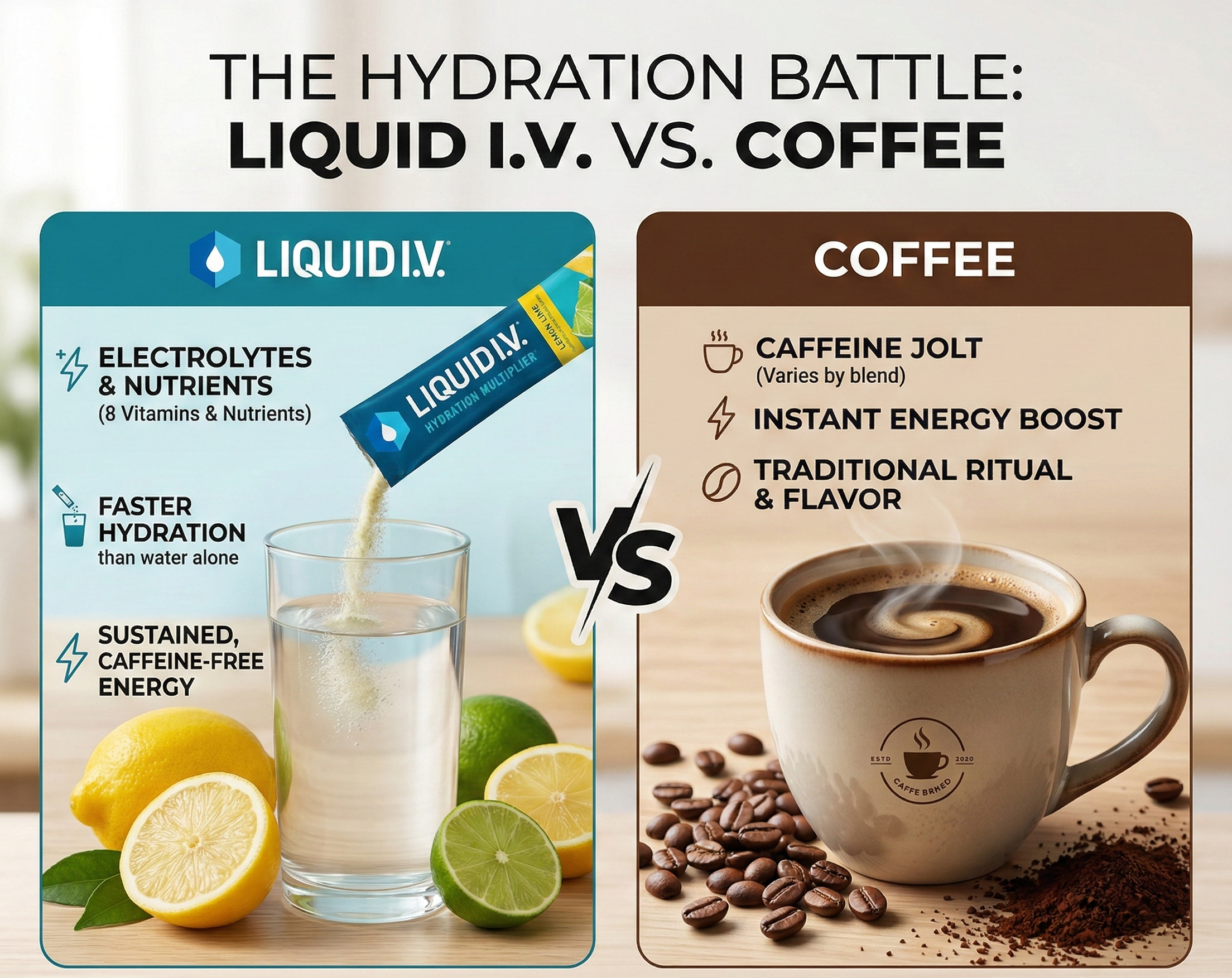
We’re a coffee site, so this might seem like a strange question for us to ask. But a lot of coffee drinkers are also reaching for Liquid I.V. these days — especially the Energy Multiplier, which packs 100mg of caffeine plus L-Theanine and electrolytes into a single packet. So let’s give this a fair comparison and settle when each one actually makes sense.
Short answer: they’re not really competitors. They serve different jobs. But if you want the longer answer — and when one genuinely wins over the other — keep reading.
New to Liquid I.V.? Our Liquid I.V. Complete Guide covers every product line, nutrition facts, and how to use it properly before you spend money on a box.
Caffeine: Closer Than You’d Think
The Liquid I.V. Energy Multiplier contains 100mg of natural caffeine per packet, sourced from Coffeeberry® extract (the fruit surrounding the coffee bean) in most flavors, or from Matcha and Guayusa in the Lemon Ginger variant. That’s roughly the equivalent of:
- An 8-oz cup of drip coffee (~95–100mg)
- Two standard espresso shots (~130–140mg combined — so actually slightly less)
- About 2.5x a standard green tea
So yes, a single Liquid I.V. Energy packet has meaningful caffeine — this isn’t a token amount. The new Sugar-Free Energy Multiplier (launched 2025) actually doubles down on the formula, pairing 100mg caffeine with 200mg L-Theanine and added magnesium for a more complete energy profile.
Your average medium-sized coffee from a café runs 150–250mg caffeine depending on how it’s brewed and what size you order. So if you drink a large coffee or multiple cups, Liquid I.V. has notably less caffeine per serving. That’s not necessarily a bad thing.
The Hydration Factor: Liquid I.V.’s Real Advantage
Coffee is a mild diuretic — the caffeine causes your kidneys to excrete slightly more water than usual. The effect is modest for habitual coffee drinkers whose bodies have adapted, but it’s real. Starting your morning with 2–3 cups of coffee on an empty stomach, after 7–8 hours of no fluids overnight, contributes to the mid-morning sluggishness a lot of people experience and wrongly blame on “needing more coffee.”
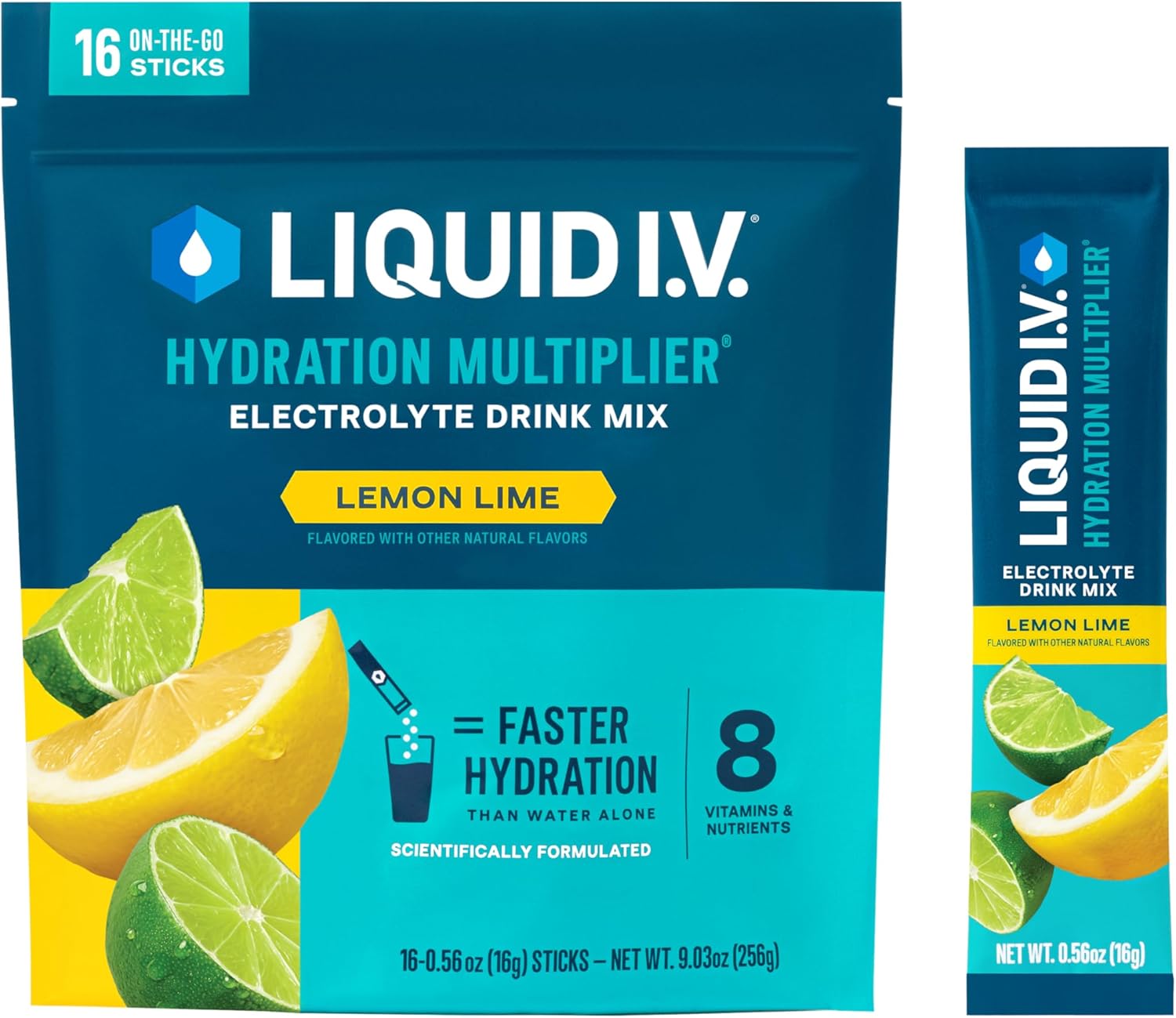
Liquid I.V. does the opposite. It uses a sodium-glucose co-transport mechanism (based on WHO oral rehydration science) to move water across your intestinal wall faster than plain water. A 2025 clinical study at the University of Memphis confirmed statistically significant improvements in net fluid balance compared to water alone at the 4-hour mark.
In plain terms: coffee energizes you; Liquid I.V. hydrates you. Those are related but genuinely different things. The dehydration that builds up overnight is real, and no amount of caffeine fixes it. It just masks the fatigue that dehydration causes.
How They Feel Different in Practice
Coffee delivers caffeine fast — most people feel the effect within 15–30 minutes of drinking it. The onset is clear, the energy is pronounced, and for many people it comes with a mild anxiety edge or heart rate increase, especially on an empty stomach.
The Liquid I.V. Energy Multiplier pairs caffeine with L-Theanine (100–200mg depending on the formula). L-Theanine is an amino acid found naturally in tea that promotes alpha brain wave activity — associated with calm focus without drowsiness. The combination of caffeine + L-Theanine is one of the most well-researched cognitive stacks in the supplement world. The result is a smoother, less spiky energy that most people describe as “focused and alert” rather than “wired.” You get the lift without as much of the jitteriness or crash.
The other difference is duration. Standard coffee caffeine peaks around 30–60 minutes and starts declining after 2–3 hours. The Energy Multiplier formula feels more sustained to most users, partly because the L-Theanine extends the useful portion of the caffeine curve and partly because rehydrating improves cognitive function on its own.
When Coffee Is the Better Call
You need a strong, fast hit of caffeine. If you’re tired and need to be functional in 20 minutes, a strong cup of coffee is still the fastest delivery vehicle for caffeine that actually tastes exceptional. No hydration powder competes with a well-made espresso for sheer pleasure and speed.
You’re already well hydrated. If you drink plenty of water, slept well, and are starting the day feeling fine, coffee is a great choice. The hydration advantage of Liquid I.V. is irrelevant if you’re not dehydrated.
Cost and convenience. A cup of home-brewed coffee costs pennies. A Liquid I.V. Energy packet runs $1.00–$1.56. Coffee wins economically unless you’re already buying specialty drinks.
You want ritual and flavor complexity. This one isn’t even close. Coffee has thousands of flavor profiles, brewing methods, origins, and preparation styles. Liquid I.V. Energy has four flavors. Coffee culture is irreplaceable for the people who care about it.
When Liquid I.V. Energy Wins
You wake up feeling dehydrated. If you wake up with a dry mouth, headache, or general grogginess — especially after alcohol, a late night, intense exercise the day before, or travel — Liquid I.V. addresses the actual cause of how you feel. Caffeine alone won’t fix dehydration-induced fatigue.
Afternoon slump without the sleep disruption. Coffee after 2pm can disrupt sleep for caffeine-sensitive people. The Energy Multiplier’s 100mg (versus 150–250mg in a large coffee) is a more measured afternoon dose that’s less likely to keep you up at 11pm.
Travel and no coffee access. Liquid I.V. packets are TSA-friendly, don’t require equipment, and dissolve in a water bottle. On long flights where the coffee is terrible, this is a genuinely useful alternative.
You don’t tolerate coffee well. Acid reflux, stomach sensitivity, anxiety, or heart palpitations from coffee are common complaints. Liquid I.V. Energy delivers caffeine from plant sources without the acidity or tannins that cause GI issues for many coffee drinkers.
You want jitter-free focus for creative or detail work. The L-Theanine combination consistently outperforms pure caffeine in tasks requiring sustained attention and reduced anxiety. Writers, designers, and developers often report preferring this combination over high-caffeine coffee for focused work sessions.
Can You Use Both? (Yes, and Here’s How)
The most practical approach for coffee people isn’t to choose — it’s to sequence them intentionally:
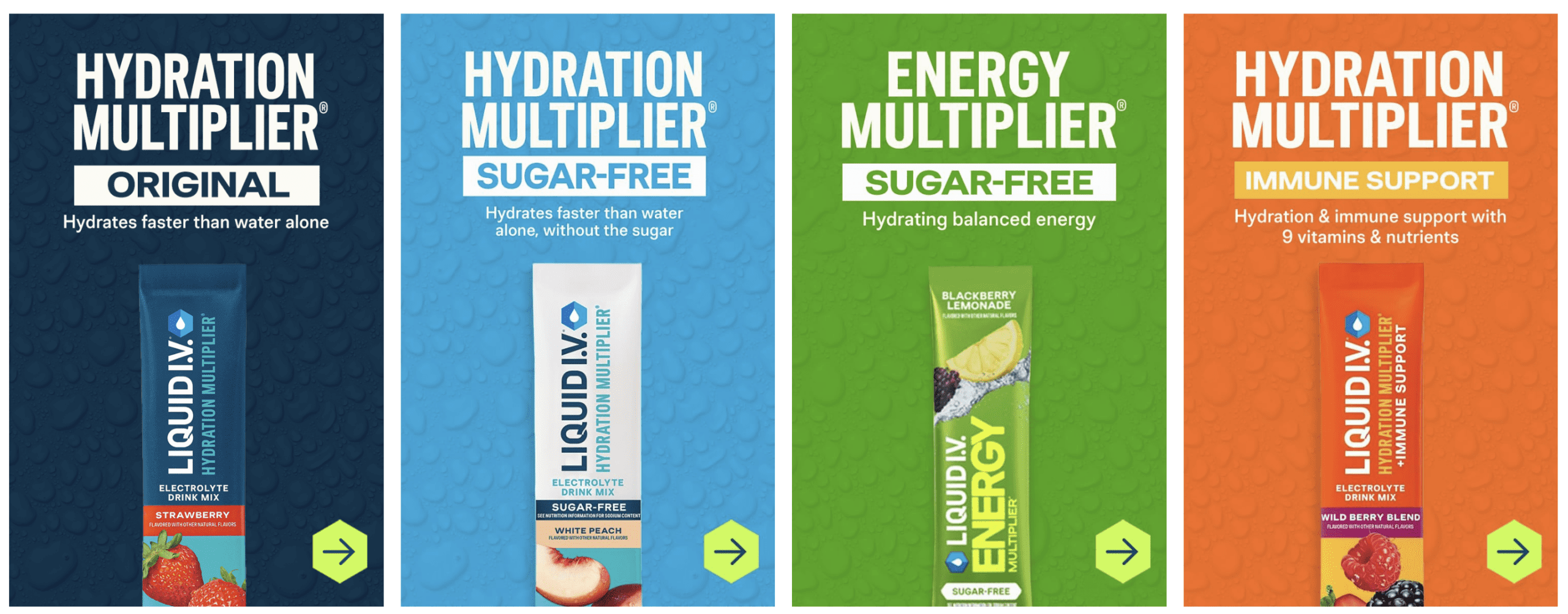
- Start with Liquid I.V. Hydration Multiplier (no caffeine) before your coffee. Mix a packet while your coffee brews. You rehydrate after overnight sleep, your coffee tastes better on a hydrated palate, and you don’t get the mid-morning crash that often comes from caffeine on an empty, dehydrated stomach.
- Use the Energy Multiplier as your afternoon option instead of a second coffee. You get enough caffeine to push through, the L-Theanine keeps it clean, and you’re less likely to disrupt evening sleep.
- Use the regular Hydration Multiplier as a post-workout or travel tool entirely separate from your coffee routine.
On a caffeine math note: if you have the Energy Multiplier (100mg) in the morning AND your usual coffee (150–200mg), you’re at 250–300mg total — still within the FDA’s generally recognized safe daily limit of 400mg, but something to be aware of if you’re caffeine-sensitive.
Verdict: Different Tools for Different Jobs
Coffee is better when you want a fast, strong, delicious caffeine experience and you’re already hydrated. Liquid I.V. Energy is better when you’re dehydrated and need sustained focus without jitters — and the non-caffeinated Hydration Multiplier is best for genuine rehydration situations that have nothing to do with caffeine at all.
As a coffee drinker, the best use of Liquid I.V. isn’t to replace your morning cup — it’s to make your whole day’s hydration better so your coffee actually hits the way it should.
If you want to know which Liquid I.V. flavors are worth trying, our full flavor ranking covers all 30+ options with honest reviews. And if you want the complete breakdown of every product line, nutrition facts, and pricing guide, that’s all in our Liquid I.V. Complete Guide.