best espresso machine under 300
You do not need to spend a fortune to start pulling real espresso at home. The under-$300 price range has improved dramatically in recent years, with machines that offer genuine 9-bar extraction, PID temperature control, and steam wands capable of producing actual microfoam — features that were reserved for $500+ machines not long ago. The tradeoffs at this price are mostly in build materials and accessories, not in espresso quality.
Below are the best espresso machines you can buy for under $300, followed by practical advice on what to look for and what to pair with your machine to get the best results.
1: Breville Bambino BES450

The Breville Bambino is the consensus best espresso machine under $300 and the one recommended by CNN Underscored, Consumer Reports, and virtually every major coffee review site. At around $250–$300 (frequently on sale), it delivers performance that punches well above its price. The ThermoJet heating system reaches brewing temperature in approximately 3 seconds — faster than machines costing three times as much. It uses the same 54mm portafilter and low-pressure pre-infusion followed by 9-bar extraction found in higher-end Breville models. The manual steam wand produces genuine microfoam for latte art, not just bubbly froth. The compact footprint fits easily on small counters, and it is genuinely simple to use from day one.
The main tradeoff: no built-in grinder. You will need a separate burr grinder for the best results. That said, the included pressurized basket works well with pre-ground coffee if you want to start simple and upgrade later.
- ThermoJet heating — ready to brew in 3 seconds
- 54mm portafilter with 9-bar extraction
- Manual steam wand for real microfoam
- Extremely compact design
- Requires separate grinder for best results
2: Casabrews 3700 Essential

The Casabrews 3700 Essential is the surprise standout in the budget espresso space. In CNN Underscored’s testing, it outperformed every machine in its price range and even a couple of pricier models. It heats up quickly, pulls consistent double shots in under 20 seconds, and delivers rich, well-balanced espresso with good crema. The 20-bar pump system (which regulates down to optimal extraction pressure) and stainless steel construction give it a more substantial feel than many sub-$200 machines.
The honest limitations: the accessories feel cheap (the portafilter and tamper are where costs were cut), and securing the portafilter can shift the machine on the counter. These are common tradeoffs at this price point. But for espresso quality per dollar, the Casabrews 3700 is hard to beat.
- 20-bar pump with consistent extraction
- Stainless steel build at a budget price
- Fast heat-up and quick shot times
- Accessories are entry-level quality
- Excellent value for the price
3: De’Longhi Stilosa EC260BK
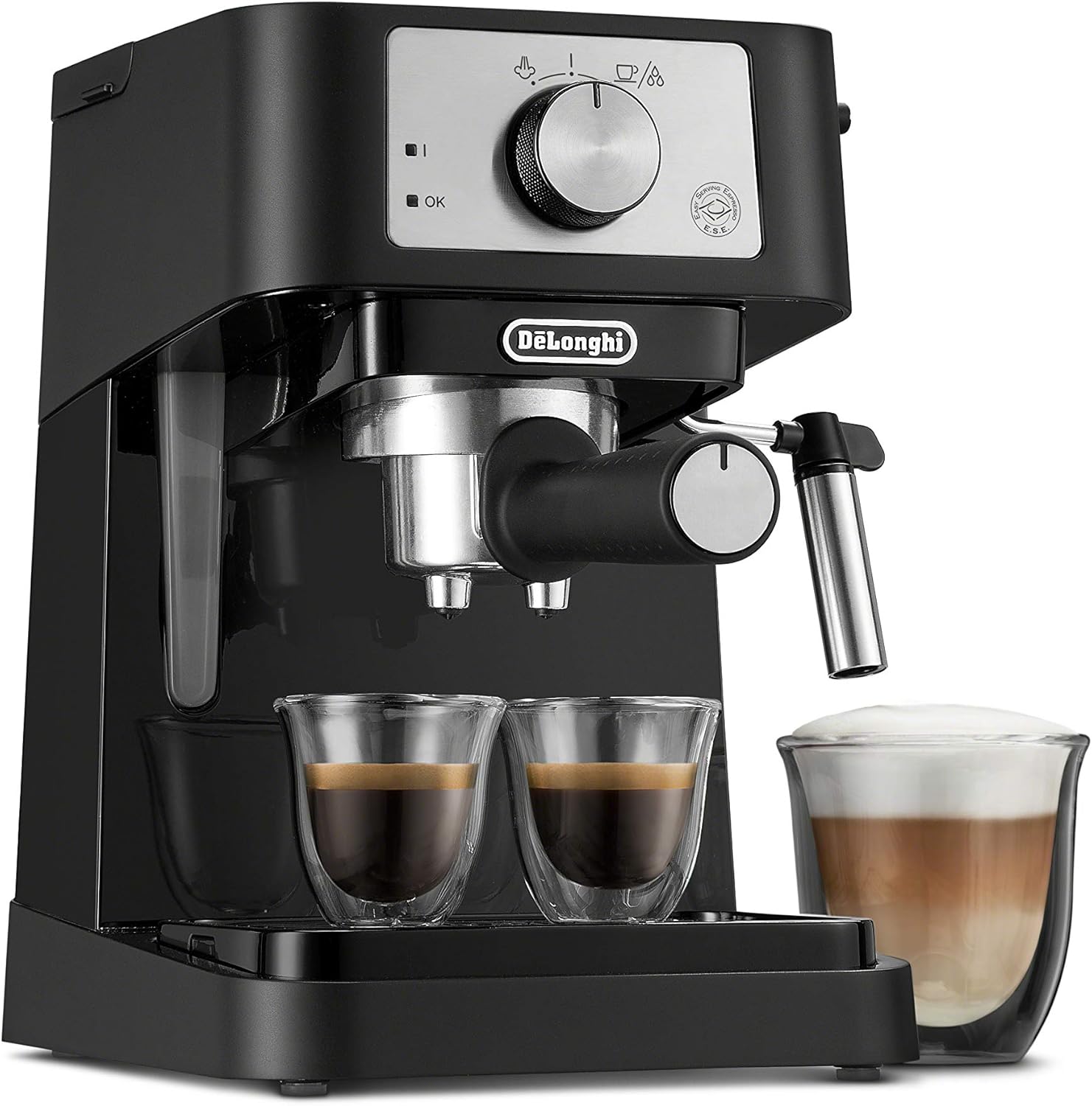
At roughly $150, the De’Longhi Stilosa is the cheapest true espresso machine worth buying. It is a real portafilter machine with a 15-bar pump and a stainless steel boiler built to last. The manual steam wand has a surprisingly good range of motion for this price and can produce decent microfoam with practice. Included are a portafilter, tamper, and filters for single and double shots.
The Stilosa is the ideal entry point if you want to learn espresso on a tight budget. It will teach you the fundamentals — dosing, tamping, extraction timing, milk steaming — without a huge financial commitment. If you decide you love the hobby, you can upgrade later knowing you have real skills. If you just want a simple daily espresso martini or a quick shot before work, the Stilosa does the job. Pair it with a grinder under $100 and quality espresso beans and you are set.
- Approximately $150 — one of the most affordable real espresso machines
- 15-bar pump with stainless steel boiler
- Manual steam wand with good range of motion
- Compact and lightweight
- Plastic portafilter and accessories are where costs are cut
4: Mr. Coffee Cafe Barista
The Mr. Coffee Cafe Barista takes a different approach: instead of asking you to learn steaming technique, it handles milk frothing automatically. One-touch buttons for espresso, cappuccino, and latte make this the simplest machine on the list. The automatic milk frother pulls from a removable reservoir that can be stored in the fridge between uses. The 15-bar pump pulls respectable shots, and the entire interface is just three buttons.
This is the best pick for someone who wants milk drinks every morning without thinking about extraction variables or learning to steam. The foam is more bubbly than silky (do not expect latte art), but for daily cappuccinos and lattes, it gets the job done with zero learning curve.
- One-touch buttons for espresso, cappuccino, and latte
- Automatic milk frother with fridge-safe reservoir
- 15-bar pump
- Three-button interface — no learning curve
- Foam quality is bubbly rather than silky microfoam
What to Know Before Buying an Espresso Machine Under $300
You will probably need a grinder. Most machines in this range do not include a built-in grinder. A burr grinder is strongly recommended over a blade grinder for espresso — the consistency of the grind matters more than almost any other variable. If budget is tight, check out our picks for the best coffee grinder under $100. Alternatively, you can start with pre-ground espresso and a pressurized basket (included with most of these machines), then upgrade to a grinder when you are ready.
Water quality matters more than you think. The minerals in your tap water affect both flavor and machine longevity. Using the right water for espresso — even a simple pitcher filter — can make a noticeable difference in taste and prevent scale buildup.
Descale regularly. Budget machines are just as susceptible to mineral buildup as expensive ones. Regular descaling keeps your espresso tasting right and extends the life of the machine. We have step-by-step guides for descaling Breville machines and other popular brands.
Beans matter as much as the machine. Even a $300 espresso machine can produce excellent shots with fresh, quality beans. Our guide to the best coffee beans for espresso will help you find the right roast for your setup.
Conclusion
The Breville Bambino is our top pick for most people shopping under $300. It delivers the same extraction quality as far more expensive machines in a compact, beginner-friendly package. If your budget is tighter, the De’Longhi Stilosa at around $150 proves you can get into real espresso for surprisingly little. And if convenience is your priority over control, the Mr. Coffee Cafe Barista handles everything automatically.
Whichever machine you choose, pair it with a decent grinder and fresh beans, and you will be pulling shots at home that rival what you get at a coffee shop — for a fraction of the daily cost. For more options at a higher price point, check out our guide to the best espresso machines overall.