Best espresso machine for beginners
Getting into espresso at home can feel intimidating. There are grind settings to learn, tamping pressure to figure out, extraction times to worry about, and milk steaming techniques that take practice. The good news is that the right machine makes the learning curve much more manageable — and some machines are specifically designed to be forgiving while you build your skills.
The best beginner espresso machine is one that produces good espresso without demanding perfection from you, has room to grow as your skills improve, and does not cost so much that you feel locked in if you decide espresso is not your thing. Here are our top picks for 2026.
1: Breville Bambino BES450

The Breville Bambino is the best espresso machine for beginners by a wide margin. It combines real espresso performance with a design that is genuinely easy to use from day one. The ThermoJet heating system is ready to brew in 3 seconds — no waiting, no temperature surfing, no guesswork. The included pressurized basket is forgiving of grind inconsistencies, which means you can start with pre-ground coffee and still get a respectable shot while you learn.
When you are ready to level up, switch to the included non-pressurized basket with freshly ground beans from a burr grinder, and the Bambino will keep up with your improving skills. The 54mm portafilter and 9-bar extraction produce real espresso — this is not an “espresso-style” machine. The manual steam wand takes some practice, but it teaches you proper technique and can produce genuine microfoam for flat whites and cappuccinos.
- ThermoJet heating — 3-second startup, no waiting
- Pressurized basket for beginners, non-pressurized for growth
- 54mm portafilter with genuine 9-bar extraction
- Manual steam wand teaches real technique
- Compact design at around $250–$300
2: Breville Barista Express BES870XL

The Barista Express is the best all-in-one option for beginners who want to skip buying a separate grinder. The built-in 16-setting conical burr grinder means you go from whole beans to espresso in one machine — no extra equipment, no extra counter space, and one less variable to figure out. The grinder doses directly into the portafilter, which simplifies the workflow significantly.
The same low-pressure pre-infusion and 9-bar extraction found in commercial-style machines ensures you are learning on a setup that produces real espresso. The PID temperature control keeps the water consistent shot to shot, and the manual steam wand gives you full control over milk texture. This machine is a bigger investment than the Bambino, but the included grinder saves you $100–$200 and removes a significant barrier to entry. We have a full guide on descaling Breville machines to keep it performing well.
- Built-in 16-setting burr grinder — no separate grinder needed
- PID temperature control for consistency
- Low-pressure pre-infusion with 9-bar extraction
- Manual steam wand for learning latte art
- Higher price but eliminates need for separate grinder
3: De’Longhi Stilosa EC260BK
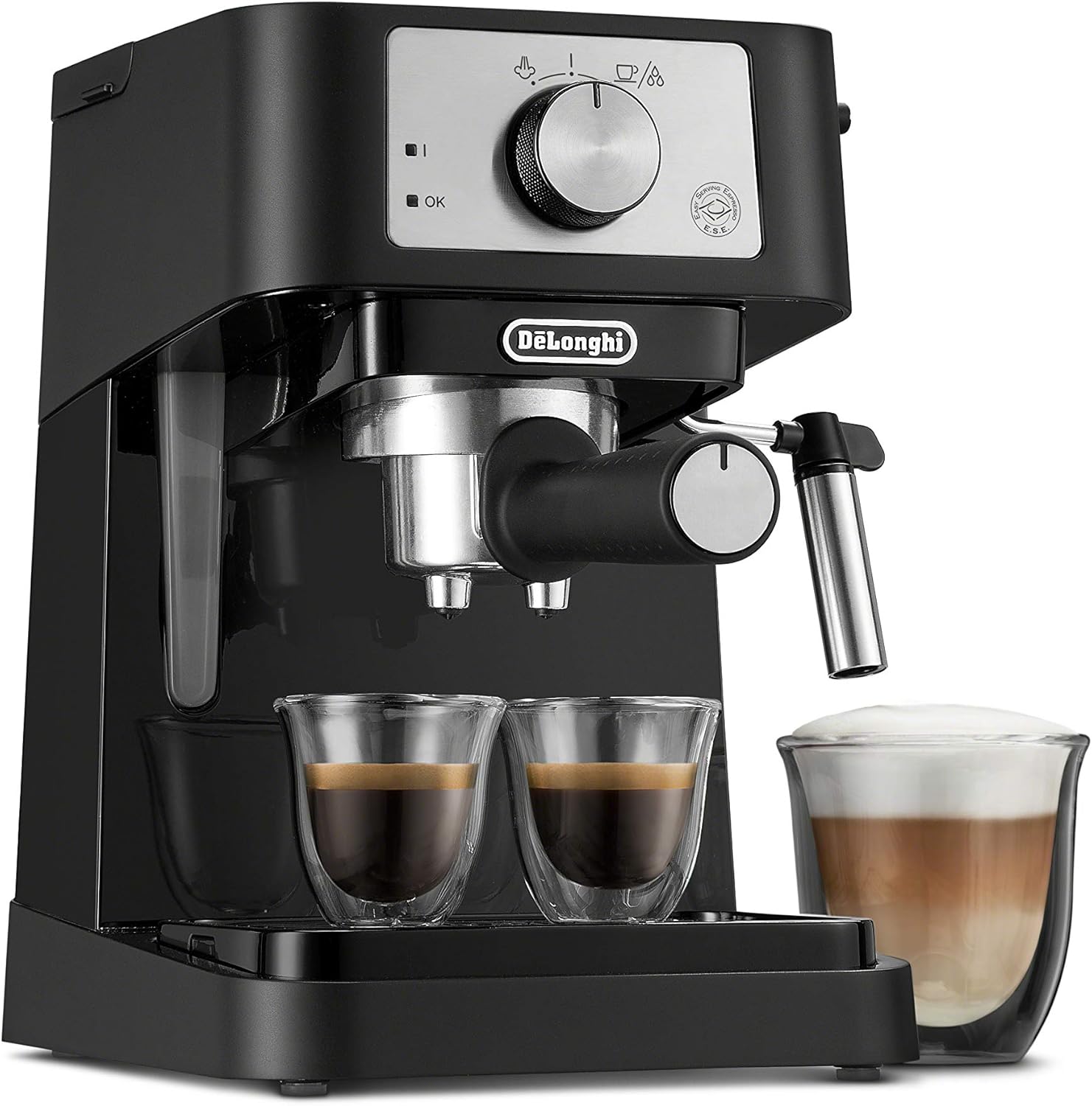
At around $150, the Stilosa is the cheapest way to start learning real espresso. It is a genuine portafilter machine with a 15-bar pump, stainless steel boiler, and manual steam wand. The feature set is stripped down — no PID, no programmability — but that simplicity is actually an advantage for beginners. Fewer settings means fewer things to go wrong, and you can focus on the fundamentals: grind, dose, tamp, extract.
The manual steam wand has better range of motion than most machines at this price, and the included portafilter and tamper get you started right away. The honest limitation is the plastic accessories — the portafilter feels flimsy compared to higher-end machines. But if you are testing whether home espresso is for you without a big financial commitment, the Stilosa is the right machine. Pair it with a grinder under $100 and quality espresso beans for the best experience.
- Around $150 — lowest cost real espresso machine
- 15-bar pump with durable stainless steel boiler
- Simple design with no complicated settings
- Manual steam wand with good range of motion
- Plastic portafilter and accessories
4: Mr. Coffee Cafe Barista

The Mr. Coffee Cafe Barista is the best beginner machine for people who specifically want milk drinks without any learning curve. The automatic milk frother handles everything — just fill the reservoir, press the cappuccino or latte button, and the machine brews the espresso and froths the milk for you. There is no steaming technique to learn, no milk thermometer to worry about, and no cleanup of a steam wand.
The espresso itself is decent (15-bar pump, pressurized portafilter), and the one-touch interface is genuinely foolproof. The tradeoff is that you have very limited control, and the foam quality is more bubbly than silky. You will not be making latte art with this machine. But if your goal is a simple, no-fuss cappuccino every morning, the Mr. Coffee Cafe Barista delivers that experience at a very affordable price.
- One-touch buttons for espresso, cappuccino, and latte
- Automatic milk frother — no technique required
- 15-bar pump with pressurized portafilter
- Extremely beginner-friendly with 3-button interface
- Limited control and bubbly (not silky) foam
5: Philips 3200 Series with LatteGo

If budget is not the primary concern and you want the absolute easiest path to good espresso, the Philips 3200 is a super-automatic that does everything. It grinds, doses, tamps, brews, and froths milk — all at the touch of a button. There is literally nothing for you to learn except which button to press. The LatteGo milk system is the easiest to clean of any automatic we have tested (just 2 parts).
The 12-setting ceramic grinder handles different beans well, and you can customize drink strength, volume, and temperature. This is the best pick for someone who wants cafe-quality drinks at home but has zero interest in learning espresso technique. It is also ideal for households where multiple people drink different things — one person’s ristretto is just as easy to make as another person’s latte. For more on super-automatics, see our full guide to the best super-automatic espresso machines.
- Fully automatic bean-to-cup — zero technique required
- LatteGo milk system with 2-part cleanup
- 12-setting ceramic burr grinder
- Customizable strength, volume, and temperature
- Higher price point but maximum ease of use
What Beginners Actually Need to Know
The grinder matters more than the machine. This is the single most important thing to understand about espresso. A cheap machine with a great grinder will outperform an expensive machine with a bad grinder. If you buy a semi-automatic machine (Bambino, Barista Express, or Stilosa), invest in the best burr grinder you can afford.
Start with the pressurized basket. Most beginner machines include both a pressurized and non-pressurized basket. The pressurized basket compensates for inconsistent grinds and imperfect tamping. Start there, and switch to the non-pressurized basket once you have a good grinder and consistent technique.
Use fresh beans. Coffee starts going stale about 2–4 weeks after roasting. Buy from a local roaster or a brand that prints the roast date on the bag. Our guide to the best espresso beans can point you in the right direction.
Water quality affects everything. Even a perfect setup will taste wrong if your water is bad. Filtered water — even from a simple pitcher filter — can make a real difference.
Keep your machine clean. Backflush after every session (if your machine supports it), wipe the steam wand after every use, and descale on a regular schedule. We have guides for Breville, Breville Bambino, and Nespresso.
Conclusion
The Breville Bambino is the best espresso machine for beginners. It is easy enough to use on day one with pre-ground coffee, but has genuine room to grow as you develop your skills. The Barista Express is the best pick if you want an all-in-one setup with a built-in grinder. The Stilosa is the right call if you want to test the waters for under $150. And the Philips 3200 is perfect if you want zero learning curve and push-button convenience.
Start simple, use good beans, and enjoy the process — the best part of home espresso is that it only gets better as you learn.