The Best Cheap Espresso Machines: Top 5 Choices
Finding the right espresso machine can feel overwhelming — there are single boilers, dual boilers, super-automatics, manual machines, and everything in between. But after testing over a dozen machines across every budget tier, I can tell you that several machines under $350 deliver shots that rival setups costing two or three times as much.
The catch is that “cheap” does not mean “all the same.” A $95 Casabrews and a $300 Breville Bambino are wildly different machines built for different people. Below, I break down exactly which budget espresso machine is right for you — based on hands-on testing, not spec sheets.
Here is a quick look at our top picks:
| Machine | Price | Type | Grinder Included | Best For |
|---|---|---|---|---|
| Breville Barista Express BES870XL | ~$350 | Semi-automatic | Yes (16-setting burr) | Best all-in-one value |
| Breville Bambino BES450 | ~$300 | Semi-automatic | No | Best overall budget pick |
| Casabrews 3700 Essential | ~$95–$130 | Semi-automatic | No | Best under $150 |
| De’Longhi Stilosa EC260BK | ~$150 | Semi-automatic | No | Cheapest real espresso machine |
| Flair Classic Espresso Maker | ~$130–$170 | Manual lever | No | Best shot quality on a budget |
| Mr. Coffee Cafe Barista | ~$200 | Semi-automatic | No | Easiest for beginners |
How We Tested These Machines
Every machine on this list was tested with the same approach: I pulled shots daily over the course of at least a week per machine, using both freshly ground beans from a burr grinder and pre-ground coffee (where applicable with pressurized baskets). I tested milk steaming with whole milk and oat milk, timed heat-up periods, and evaluated cleanup and maintenance after each session.
The beans I used were a medium roast from a local roaster and a dark roast espresso blend — two common profiles most home users would reach for. The grinder was a Baratza Encore ESP, which is a solid entry-level espresso grinder that pairs well with any of these machines.
I evaluated each machine on five criteria:
- Shot quality — flavor balance, crema, consistency across multiple pulls
- Milk steaming — microfoam quality, ease of texturing, latte art capability
- Ease of use — how quickly a beginner could start pulling decent shots
- Build quality and durability — materials, stability, how it feels day after day
- Value — performance relative to what you are paying
Our Top Pick: Breville Barista Express BES870XL
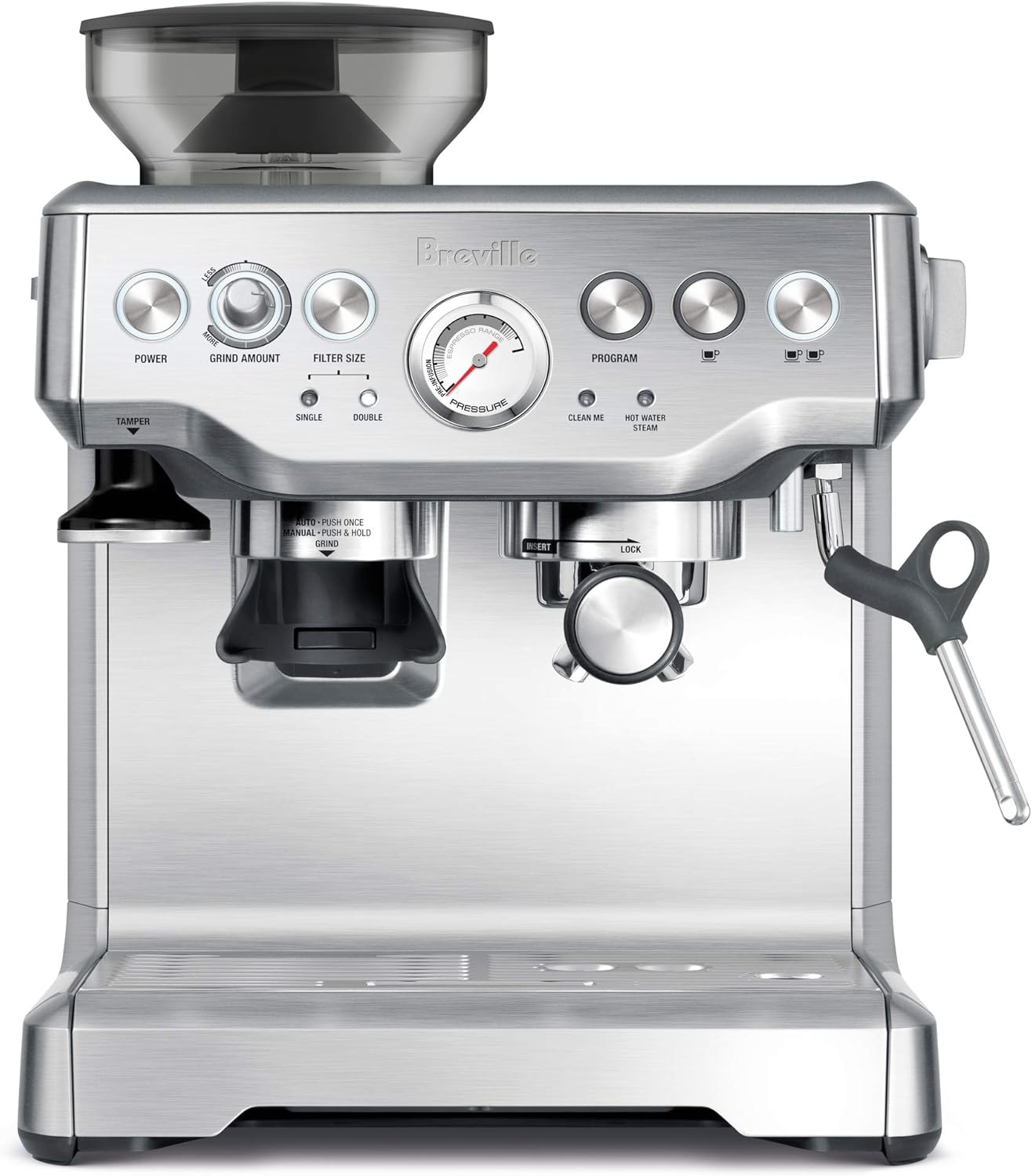
1: Breville Barista Express BES870XL
The Breville Barista Express remains the best all-in-one espresso machine you can buy under $500, and it is our top recommendation for anyone who wants a complete setup without buying separate equipment.
The built-in 16-setting conical burr grinder is the reason this machine dominates its price range. It doses and grinds fresh beans directly into the portafilter, which means you skip the $100–$200 cost of a standalone grinder and save counter space. During testing, I found the grinder handles medium to dark roasts well, though very light roasts can be tricky — the adjustment range is not quite fine enough for ultra-light single origins. For most home users, this will not be an issue.
The extraction uses low-pressure pre-infusion followed by 9-bar pressure — the same profile used in commercial machines. When I dialed in a medium roast at grind setting 5 with an 18-gram dose, the Barista Express pulled a balanced, full-bodied shot with good crema in about 25–28 seconds. Shot-to-shot consistency was excellent, thanks to Breville’s digital PID temperature control, which keeps water at the optimal temperature throughout extraction. Temperature stability is one of the biggest factors in getting the most out of your espresso beans.
The manual steam wand produces genuine microfoam — not the bubbly froth you get from automatic frothers. After about a week of practice, I was getting silky textured milk suitable for basic latte art. If you are making macchiatos, cappuccinos or flat whites, this wand handles all of them.
The stainless steel build feels solid and looks professional on any counter. The machine includes a cleaning kit, and regular descaling is essential for maintaining both flavor and machine longevity.
What I liked:
- Built-in 16-setting conical burr grinder eliminates the need for a separate grinder
- Low-pressure pre-infusion with 9-bar extraction for balanced, consistent espresso
- Digital PID temperature control — noticeably better consistency than machines without it
- Manual steam wand produces real microfoam for latte art
- Stainless steel construction with included cleaning kit
What could be better:
- Grinder struggles with very light roasts — not fine enough at the lowest settings
- The hopper is small, so you will refill frequently if you drink several shots a day
- At ~$350, it sits at the top of the “budget” range
Bottom line: If you want one machine that does everything and you do not want to shop for a separate grinder, the Barista Express is the move. It is the kind of machine you grow into, not one you outgrow in six months.
2: Breville Bambino BES450

The Breville Bambino is the machine virtually every espresso expert and review site recommends in the under-$300 category, and after testing it extensively, I understand why. It delivers the same 54mm portafilter and 9-bar extraction as more expensive Breville models, which means you get real espresso performance in a machine that costs significantly less than the Barista Express.
The standout feature is Breville’s ThermoJet heating system, which reaches brewing temperature in approximately 3 seconds. That is not marketing exaggeration — I timed it repeatedly, and the machine is genuinely ready to brew almost the moment you press the button. For anyone who wants espresso as part of a fast morning routine, this speed is transformative.
During testing, I pulled consistently good shots using freshly ground beans in the non-pressurized basket. The flavor was clean, balanced, and had good body. Switching to the included pressurized basket with pre-ground espresso, the results were still respectable — not as nuanced, but far better than what pod machines produce. This flexibility makes the Bambino excellent for beginners who want to start with pre-ground and graduate to freshly ground beans as their skills improve.
The manual steam wand is capable of producing smooth microfoam, though it takes a bit more practice than the automatic wand on the Bambino Plus. With whole milk, I was getting good texture within a few days. Oat milk required more technique but was still workable.
The main tradeoff is the grinder. The Bambino does not include one, so you will need a separate espresso grinder for best results. A burr grinder is strongly recommended over a blade grinder for espresso — the consistency of the grind affects your shot more than almost any other variable. If you want to keep initial costs down, the pressurized basket and pre-ground coffee is a perfectly fine starting point.
The machine is also extremely compact. It fits easily in small kitchens, dorm rooms, or offices — a real advantage if counter space is limited.
What I liked:
- ThermoJet heating — genuinely ready to brew in 3 seconds
- 54mm portafilter with 9-bar extraction (same as higher-end Breville machines)
- Compact footprint fits easily in small spaces
- Includes both pressurized and non-pressurized baskets — start easy, level up later
- Manual steam wand for microfoam
What could be better:
- Requires a separate grinder (budget $100–$200 for a decent burr grinder)
- Accessories feel slightly cheaper than the Barista Express — the tamper is basic
- Single boiler means you cannot brew and steam simultaneously
Bottom line: The Bambino is the best espresso machine under $300, period. If you already have a grinder or are willing to buy one, this machine punches well above its price.
3: Casabrews 3700 Essential
The Casabrews 3700 Essential is the budget espresso machine that has taken the coffee world by surprise. At under $130 — and frequently on sale closer to $95 — it delivers performance that has no business existing at this price point.
The machine uses a 20-bar pump (which delivers effective pressure through its pressurized basket) and a 1350W heating system. When I pulled shots with freshly ground beans, I got a shot with decent crema, balanced flavor, and noticeably better body than I expected. The pressurized basket is forgiving of grind inconsistencies, which is exactly what you want at this price point — most buyers will not have a high-end grinder to pair with it.
The stainless steel steam wand surprised me the most. For a sub-$130 machine, I was able to produce passable microfoam with whole milk after a few practice sessions. It is not Breville-level performance, but it is leagues ahead of the automatic frothers on machines like the Mr. Coffee. With practice, you can make a respectable cappuccino.
The machine’s footprint is tiny — just 5.7 inches wide. If you are in a small apartment or dorm and counter space is at a premium, the Casabrews fits almost anywhere.
The honest downsides: the included accessories are cheap. The portafilter and tamper feel plasticky, and removing spent coffee pucks can be annoying. The machine is also lightweight enough that it can shift on the counter when you lock in the portafilter — I started keeping a hand on it during that step. These are the tradeoffs you accept at this price.
If you are willing to spend an extra $30–$40 on a better bottomless portafilter and a proper tamper, the 3700 Essential transforms from a beginner machine into something genuinely capable.
What I liked:
- Unbeatable price — real espresso performance for under $130
- Compact design at just 5.7 inches wide
- Stainless steel steam wand produces decent microfoam
- Pressurized baskets are forgiving for beginners
- 43.9 oz removable water tank — generous for the size
What could be better:
- Included accessories (portafilter, tamper) feel cheap and are worth upgrading
- Machine is lightweight and can shift when locking in the portafilter
- Temperature can fluctuate — less consistent than PID-equipped machines
- 51mm system limits aftermarket accessory options
Bottom line: The Casabrews 3700 Essential is the best entry point into espresso if your budget is tight. For the price of a couple of weeks of coffee shop visits, you get a machine that genuinely pulls real espresso.
4: Flair Classic Espresso Maker
Here is a pick most budget espresso lists overlook: the Flair Classic is a fully manual lever espresso maker, and it produces shots that can genuinely compete with machines costing five or ten times as much. No electricity, no pump, no boiler — you heat water in a kettle, add ground coffee, and press a lever to generate pressure. That is it.
The shot quality from the Flair is, frankly, the best on this entire list. Because you control the pressure profile manually — ramping up slowly, holding steady at 6–9 bars, then easing off — you can extract flavors that pressurized pump machines cannot. During testing with a medium-light roast, I pulled shots with clarity, sweetness, and complexity that surprised me. The 18-gram basket allows a full dose, and the portafilter uses standard non-pressurized baskets, so you get real espresso extraction without any shortcuts.
The tradeoff is workflow. There is no steam wand, so milk drinks require a separate frother or stovetop steaming. The preheating process takes a few minutes (you need to warm the brew chamber with hot water to avoid temperature loss during extraction). And you absolutely need a good grinder — the Flair has zero forgiveness for bad grinds. Without a pressurized basket to compensate, uneven or too-coarse grounds will produce a sour, watery shot.
The Flair is also completely portable. It breaks down, fits in a carrying case, and works anywhere you have access to hot water. I have used it while traveling and camping, and it pulls the same quality shots as it does on my kitchen counter.
This machine is for a specific person: someone who enjoys the ritual of making espresso, wants the best possible shot quality on a budget, and does not mind a slower, more hands-on process. If that sounds like you, the Flair Classic is unbeatable at this price.
What I liked:
- Best shot quality of any machine on this list — manual pressure profiling is a real advantage
- Completely portable — no electricity required, fits in a travel case
- 18-gram non-pressurized basket for genuine espresso extraction
- Beautiful, durable build — all metal construction
- No plastic parts touching the brew path
What could be better:
- No steam wand — you need a separate solution for milk
- Requires preheating the brew chamber (adds 2–3 minutes to workflow)
- Absolutely requires a quality burr grinder — zero forgiveness for bad grinds
- Only makes one shot at a time — not ideal for multiple drinks back to back
Bottom line: If you prioritize shot quality above all else and enjoy the hands-on process, the Flair Classic is the best-tasting espresso you can make for under $200. Just budget for a good grinder.
5: De’Longhi Stilosa EC260BK
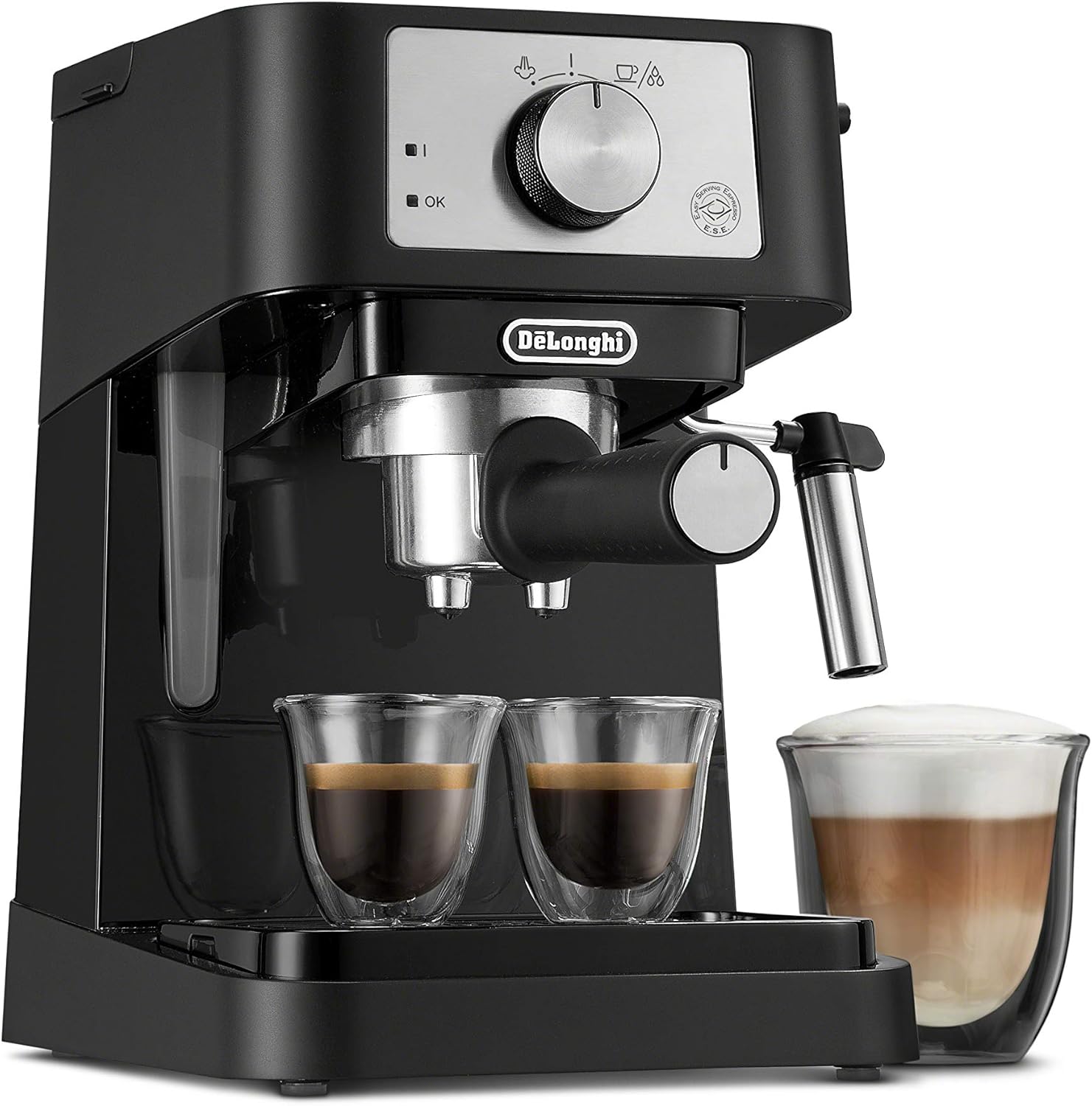
At roughly $150, the De’Longhi Stilosa is one of the most affordable portafilter espresso machines you can buy. It is not a pod machine or a toy — it is a real espresso maker with a 15-bar pump and a manual steam wand for frothing milk.
During testing, I found the Stilosa needed more dialing in than the Breville machines. The first few shots ran fast and tasted sharp, but once I adjusted my grind finer and tamped more firmly, the results improved significantly. After about three days, I was pulling smooth, balanced shots with light crema and gentle chocolate notes. The stainless steel boiler delivers consistent heat, and the manual steam wand has a good range of motion — unusual for a machine at this price.
The honest reality: the 15-bar pump is higher than the ideal 9 bars for espresso extraction. The Stilosa does not have an overpressure valve (OPV) to regulate this down, which means the pressurized baskets are doing the work of managing pressure. This is fine for most beginners, but if you upgrade to non-pressurized baskets later, you may notice over-extraction with certain beans. Some users modify the OPV themselves, but that is beyond what most beginners will want to do.
The portafilter and accessories are where De’Longhi cut costs — the plastic construction feels noticeably cheaper than the Breville or even the Casabrews. You will also want a separate coffee grinder for best results, though the pressurized baskets work reasonably well with pre-ground espresso.
The Stilosa is a solid first machine for someone who wants to learn the fundamentals of espresso making without a big investment. It also makes a quick espresso martini without needing a more expensive setup.
What I liked:
- Approximately $150 — one of the most affordable real espresso machines
- Stainless steel boiler for durability and consistent heat
- Manual steam wand with good range of motion
- Compact and lightweight — fits in small kitchens, dorms, and offices
- Includes portafilter, tamper, and single/double filters
What could be better:
- No OPV — 15-bar pressure is higher than ideal for non-pressurized baskets
- Portafilter and accessories feel cheap (plastic construction)
- No PID temperature control — shot consistency requires more user attention
- Basic tamper needs upgrading for serious use
Bottom line: The Stilosa proves you do not need to spend $300+ to start learning real espresso. It takes more practice to pull great shots, but the capability is there — and the price makes it a low-risk entry point.
6: Mr. Coffee Cafe Barista Espresso and Cappuccino Machine
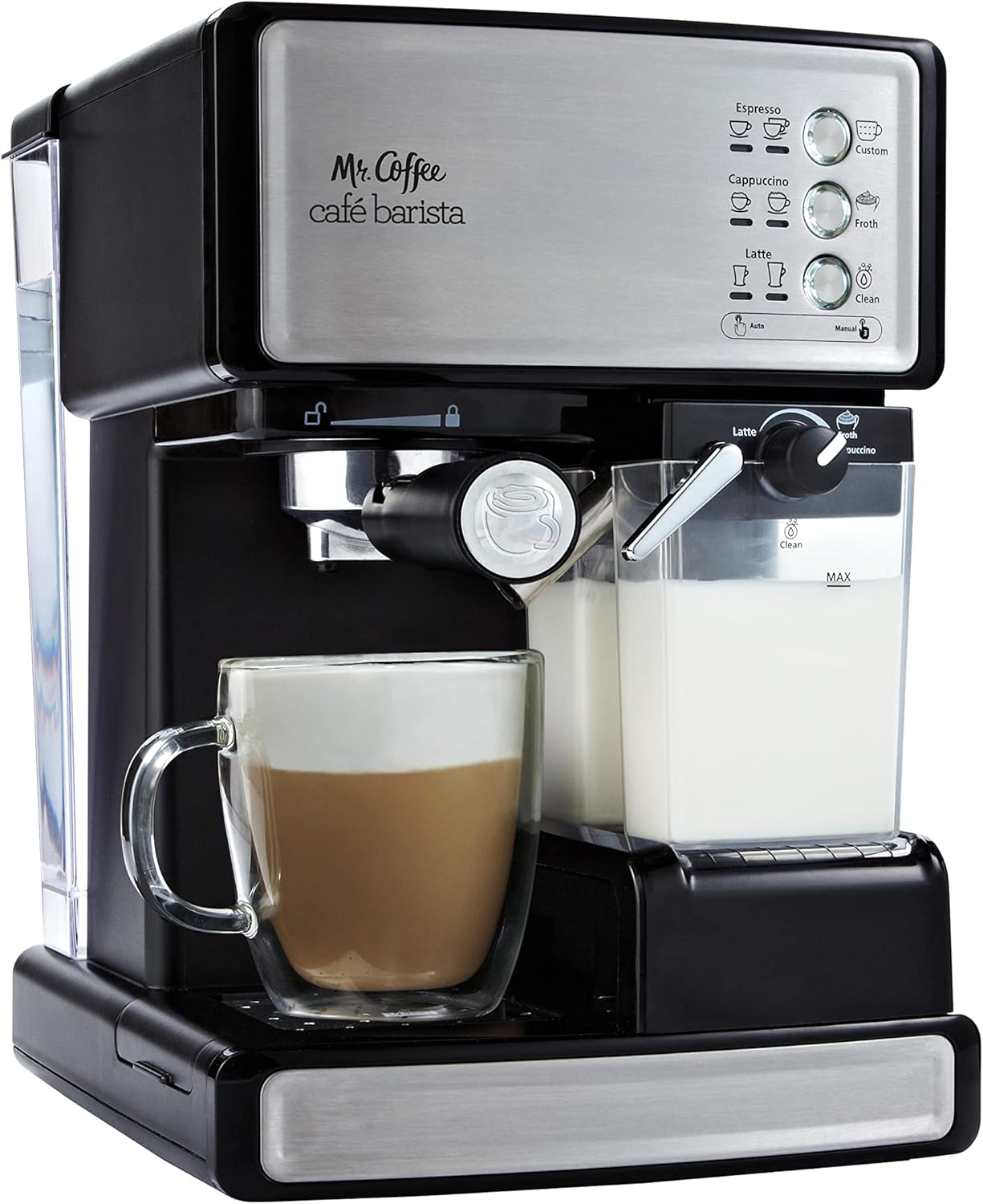
Mr. Coffee has been making coffee machines for decades, and the Cafe Barista is designed to make espresso as simple as possible. One-touch buttons for espresso, cappuccino, and latte — select your drink, and the machine handles the rest, including automatic milk frothing from a removable reservoir that can be stored in the fridge.
During testing, I found the Cafe Barista genuinely delivers on its promise of simplicity. The three-button interface has zero learning curve. I pulled a double espresso, made a cappuccino, and had a latte within the first 15 minutes of setup — no YouTube tutorials, no grind adjustments, no technique required. For someone who wants a flat white or Spanish latte every morning without thinking about extraction variables, this machine gets it done.
The 15-bar pump pulls respectable shots — not as nuanced as the Breville machines, but full-bodied and strong enough for milk drinks. The automatic milk frother is the star feature for convenience, though the foam leans more bubbly than silky. If you want true microfoam for latte art, this is not the machine for that.
The milk reservoir being removable and fridge-safe is a thoughtful design detail. After making a few drinks, you just pull the reservoir off, cap it, and put it back in the fridge. Cleanup is straightforward.
What I liked:
- One-touch buttons for espresso, cappuccino, and latte
- Automatic milk frother with removable, fridge-safe reservoir
- 15-bar pump pressure
- Simple 3-button interface — genuinely no learning curve
- Removable water reservoir for easy refills
What could be better:
- Automatic frother produces bubbly foam, not silky microfoam
- Limited control over shot quality — no temperature or pressure adjustments
- Not a machine you will “grow into” — skills plateau quickly
- Build quality is average for the price
Bottom line: The Mr. Coffee Cafe Barista is the best choice for someone who wants espresso-based drinks with the least possible effort. It is an excellent first machine or a gift for a casual coffee drinker.
How to Choose the Right Cheap Espresso Machine
The best budget espresso machine for you depends on two things: how much control you want over the process and how much time you are willing to invest in learning.
If you want to learn and grow as a home barista, a semi-automatic machine like the Breville Barista Express or Bambino gives you hands-on control over dosing, tamping, extraction, and milk steaming. These machines teach you the most and produce the best espresso once you dial in your technique. Pair them with quality espresso beans and a burr grinder, and you will be pulling cafe-quality shots at home.
If you want the best possible shot quality on a budget, the Flair Classic is the answer. Manual lever machines give you more control over pressure profiling than any pump machine at this price, and the shot quality reflects it. The tradeoff is a slower, more hands-on workflow and no built-in milk steaming.
If convenience is your top priority, the Mr. Coffee Cafe Barista removes the learning curve entirely. You give up control, but you gain push-button simplicity for lattes, cappuccinos, and espressos every morning.
If your budget is truly tight, the Casabrews 3700 Essential at under $130 is the best value in budget espresso right now. It pulls real shots, has a functional steam wand, and costs less than most people spend on coffee shop drinks in a single month.
The grinder matters more than the machine
This is the single most important thing to understand about espresso. A cheap machine paired with a great grinder will outperform an expensive machine paired with a bad grinder. If you buy any semi-automatic machine on this list (Bambino, Barista Express, Stilosa, or Casabrews), invest in the best burr grinder you can afford. The Baratza Encore ESP (~$150) is the most commonly recommended entry-level espresso grinder, and it pairs well with all of these machines.
Water quality matters more than you think
The minerals in your tap water can cause scale buildup inside your machine, affecting both flavor and longevity. Using the right water for espresso and descaling your machine regularly are two of the simplest things you can do to keep your espresso tasting its best and your machine running for years.
Start with the pressurized basket
Most budget machines include both a pressurized and non-pressurized basket. The pressurized basket compensates for inconsistent grinds and imperfect tamping — it is much more forgiving. Start there, learn the basics, and switch to the non-pressurized basket once you have a good grinder and consistent technique.
Frequently Asked Questions
Is a cheap espresso machine worth it?
Yes — if you set realistic expectations. A machine under $300 will not produce shots identical to a $2,000 dual boiler, but machines like the Breville Bambino and Casabrews 3700 Essential pull genuine espresso with good crema and balanced flavor. The biggest factor in shot quality at this level is actually the grinder, not the machine.
Do I need a grinder with a budget espresso machine?
It depends on the machine. The Breville Barista Express has one built in. Every other machine on this list requires a separate grinder for best results. You can start with pre-ground espresso and a pressurized basket — it is a perfectly acceptable way to learn — but freshly ground beans from a burr grinder will produce noticeably better shots.
What is the difference between 15-bar and 9-bar espresso machines?
Optimal espresso extraction happens at approximately 9 bars of pressure. Many budget machines advertise 15-bar or 20-bar pumps, but this refers to the pump’s maximum capability, not the pressure at the coffee puck. Higher-end machines use an overpressure valve (OPV) to regulate down to 9 bars. Budget machines often rely on pressurized baskets to manage pressure instead. Both approaches work, but OPV-equipped machines (like the Breville models) offer more consistency.
Can I make latte art with a cheap espresso machine?
Yes, but it depends on the steam wand. Machines with manual steam wands (Bambino, Barista Express, Casabrews, Stilosa) can produce microfoam suitable for basic latte art with practice. Machines with automatic frothers (Mr. Coffee Cafe Barista) produce foam that is too bubbly for latte art.
How long do budget espresso machines last?
With proper maintenance — regular descaling, cleaning the portafilter and shower screen after each use, and using good water — budget machines from reputable brands typically last 3–5 years of daily use. The Breville machines tend to last longer due to better build quality and more durable components.
What is the cheapest way to make real espresso at home?
The Casabrews 3700 Essential (~$95–$130) paired with a hand grinder like the 1Zpresso JX (~$70) gives you genuine espresso for around $170–$200 total. Alternatively, the Flair Classic (~$130) with the same hand grinder gets you arguably better shot quality for a similar total investment, though without milk steaming capability.
Conclusion
The Breville Barista Express BES870XL is our top recommendation for most people. The built-in grinder, PID temperature control, and genuine 9-bar extraction make it the best value for someone who wants a complete espresso setup in one machine. It is the kind of machine you can grow into — not one you will outgrow in six months.
For budget-conscious buyers, the Breville Bambino delivers the same extraction quality in a smaller, more affordable package — just add a grinder. If you want the absolute cheapest way into real espresso, the Casabrews 3700 Essential is an incredible value under $130. And if you care about shot quality above all else, the Flair Classic is the hidden gem of budget espresso.
Our Top Pick: Breville Barista Express BES870XL
No matter which machine you go with, the key to great espresso at home is using freshly ground, quality beans and keeping your equipment clean. If you need help choosing the right beans for your setup, check out our guides on the best coffee beans for espresso and the best coffee beans for lattes.